Nintoku-tennō-ryō Tomb|Japan’s Largest Burial Mound
Nintoku-tennō-ryō Tomb
— Japan’s Largest Burial Mound —
Author: Richard Perkins
Photos/Videos Taken: 2025/08/29
Address: 7-1079-1 Daisencho, Sakai-ku,
Sakai, Osaka 590-0035
Across Japan, there are structures known as 古墳 (kofun), or tombs. These are ancient burial mounds built in the distant past for ruling elites. Constructed by piling up earth and soil, tombs in Japan come in a variety of shapes. Some are shaped like keyholes, some are round, and others are square. They also vary widely in size, ranging from small to massive. Among all the tombs in Japan, the 仁徳天皇陵古墳 (nintoku-tennō-ryō kofun), or the Nintoku-tennō-ryō tomb in Sakai, Osaka Prefecture, is undoubtedly the most well-known.
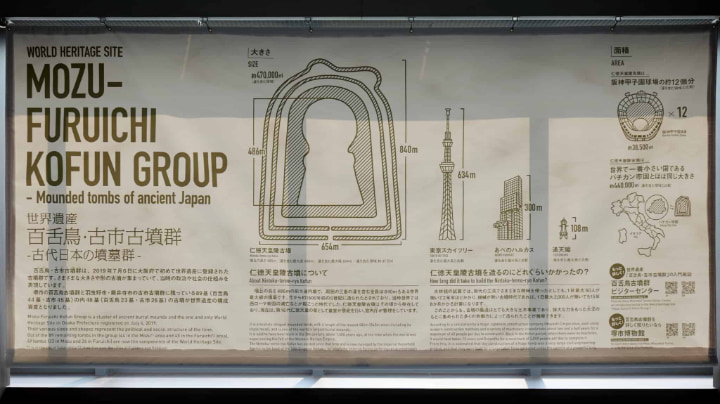
Measuring 486 meters in length with a circumference of approximately 2.7 km, the Nintoku-tennō-ryō tomb is believed to have been built in the mid-5th century. In the city of Sakai, there are many other tombs surrounding this one. There are 44 in total. Known as the 百舌鳥古墳群 (mozu-kofungun), this cluster of tombs includes the Nintoku-tennō-ryō tomb, which lies at its center. These tombs are all located within lush forested areas. Together, the tombs and surrounding forests create a landscape rich in history and natural beauty.
Including the Nintoku-tennō-ryō tomb, the Mozu tombs are all shrouded in mystery. Excavations have been done here in the past; however, none of them were very thorough. There are several reasons for this. One is the cultural attitude in Japan toward graves. Another is the influence of religious and cultural beliefs, as well as the desire to preserve important cultural assets. In addition, the Nintoku-tennō-ryō tomb is managed by the Imperial Household Agency (an agency responsible for matters concerning the Imperial Family). Given all of this, there's a general view in Japan that the Nintoku-tennō-ryō tomb—and indeed the Mozu tombs as a whole—should not be excavated.
It’s believed that Emperor Nintoku is buried in the Nintoku-tennō-ryō tomb. However, given the reasons explained, this hasn’t been confirmed.
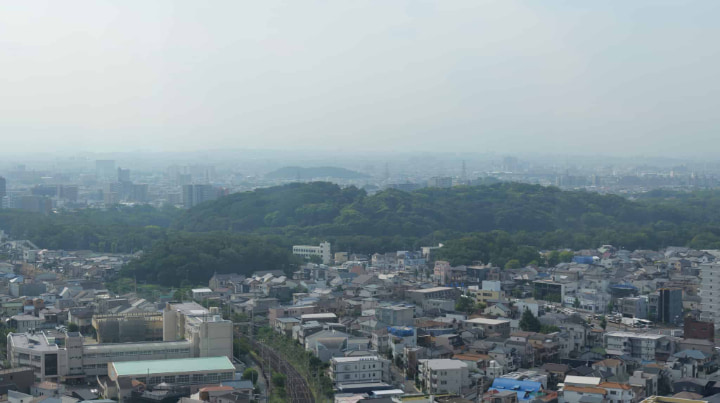
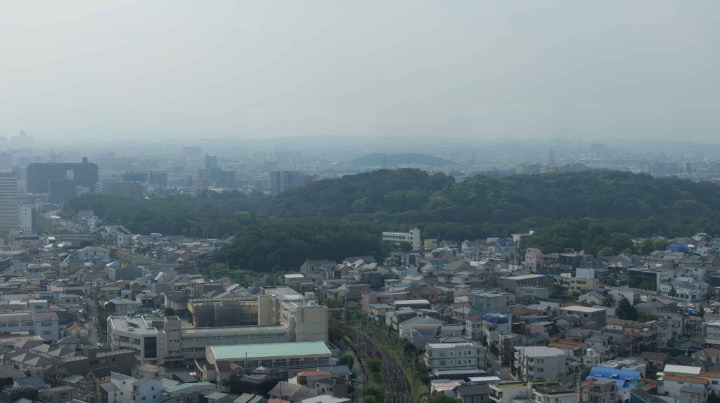
The Nintoku-tennō-ryō tomb is the largest in all of Japan. Because of this, many visit the city of Sakai to have a look at it. However, since not only this tomb but all of the tombs in the area are surrounded by forests and moats, it’s difficult to see much when getting up close. For a better view of the Mozu Tombs, the best place to visit is the 21st floor of the Sakai City office building. Surrounded by large glass windows, this floor serves as an observation deck. From here, visitors can enjoy a sweeping view not only of the city of Sakai but also of the Nintoku-tennō-ryō tomb (and the other Mozu Tombs). The sheer scale of the Nintoku-tennō-ryō tomb and the surrounding tombs across the city is truly impressive; their grandeur leaves a lasting impression.
In 2019, the Mozu Tombs and the 古市古墳群 (furu-ichi kofungun), located in the cities of Fujidera and Habikino, Osaka Prefecture, became a UNESCO World Heritage Site as part of the “Mozu-Furuichi Kofun Group: Mounded Tombs of Ancient Japan”. This was not only the first UNESCO World Heritage Site in Osaka Prefecture, but also the first group of tombs in Japan to receive such a designation. For those who’d like to learn more about these tombs, the Mozu Mounded Tombs Visitor Center (located near the Mozu Tombs) is well worth a visit. Another excellent place to visit is the Sakai City Museum, where visitors can gain a deeper understanding of these tombs. These sites are now recognized as valuable cultural heritage assets worldwide. As such, a visit to the 21st floor of the Sakai City Office, the visitor center, and the museum helps convey the importance of preserving and protecting these tombs.
As mentioned, the Nintoku-tennō-ryō tomb is the largest in Japan. Not only is it massive, but there are few tombs in Japan as impressive and overwhelming as this one. It’s definitely worth seeing. Along with the Mozu Tombs, there are many other tombs across the city of Sakai. Not only are they culturally important, but they also add to the beauty of the landscape. At the Mozu Mounded Tombs Visitor Center, visitors can experience the appeal of these tombs for themselves. It’s also easily accessible via public transportation, making for a great addition to any sightseeing itinerary in Osaka Prefecture. When next in Osaka Prefecture, be sure to visit the Nintoku-tennō-ryō tomb and the surrounding Mozu Tombs. Everyone should experience this massive and grand tomb.