Tickets
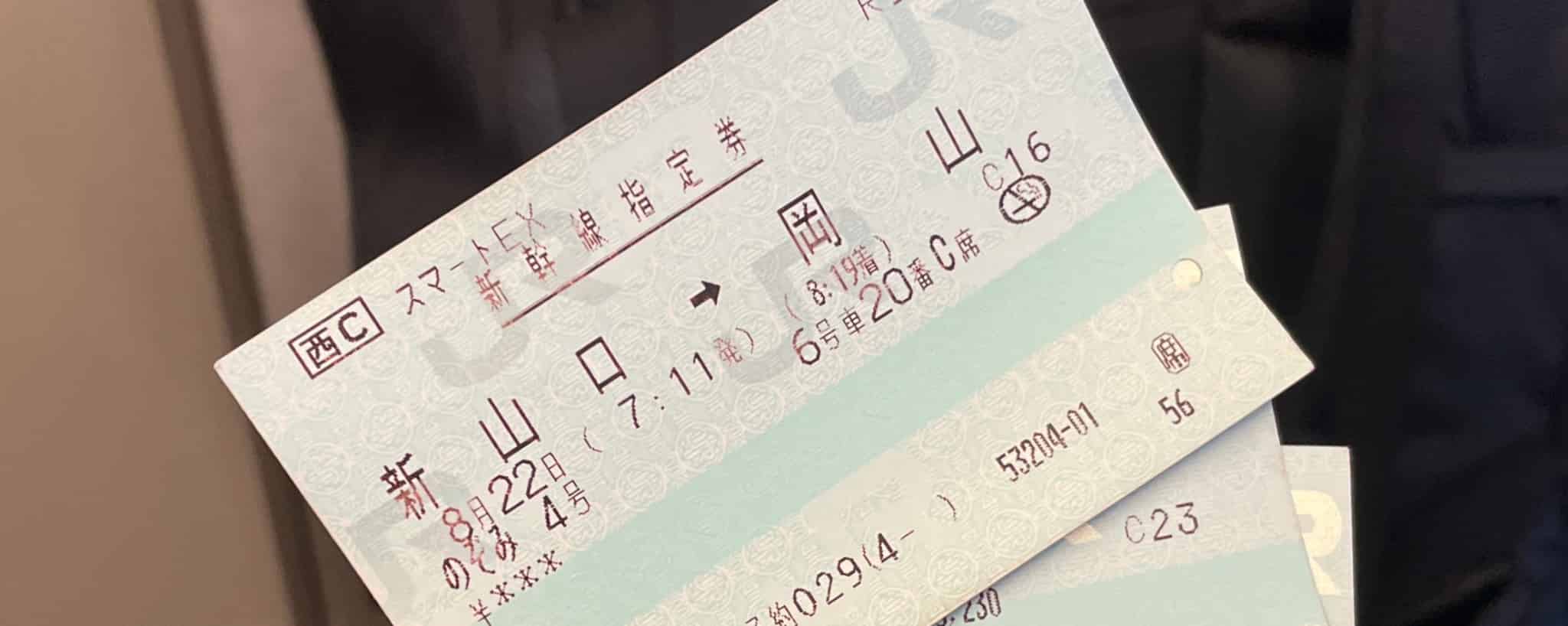
When riding public transportation in Japan that requires a ticket to be purchased in advance, there are several ways to buy one. Tickets are (mainly) used on trains and buses, but some other forms of public transportation also require them. As a foreign visitor, one can also take advantage of special discount tickets. Below, we explain the various tickets needed to ride public transportation and where they can be purchased.
Paper Ticket
When riding a train, one can buy a paper ticket at ticket machines or ticket counters at train stations. If one isn’t sure of the fare to their destination, one can buy the cheapest ticket and then pay the difference at the station they get off at. The fare for a train is calculated based on the distance. Usually, the longer the distance, the more expensive the fare.
When riding a bus, take a numbered ticket from the numbered ticket machine when boarding. In most cases, one will pay when getting off, placing the numbered ticket and the fare into the fare box, usually located at the front of the bus. Depending on the bus (or route), one may need to pay in advance, before arriving at their destination. A bus fare is (usually) calculated by the distance traveled, the same as a train fare. However, some buses charge a flat fare, regardless of the distance ridden.
Rechargeable Transit Card
This is the most commonly used ticket in Japan. It can be bought at ticket machines or ticket counters in train stations. Money is added to the card when needed. Money can be added at ticket machines in increments of ¥500. However, many ticket machines won’t let one add less than ¥1,000 at a time. Money can also be added to a transit card on board some fixed-route buses.
Recently, money can also be added to a transit card via ATMs in certain convenience stores. With the increasing use of electronic devices, physical versions of certain transit cards are no longer available for purchase. Some cards can only be purchased and used through a specific smartphone application.
Using a transit card gives a slight discount on public transportation. However, each region has its own transit card, and depending on the train line or bus route, only certain transit cards can be used. It’s best to check where a transit card can be used before buying and using one.
One-Day Pass
Depending on the city, one can purchase a one-day pass that allows unlimited rides on designated train or bus routes. Many of these passes are valid only on the day of purchase. Some passes can be bought in advance, allowing one to choose the day they use them.
In popular tourist destinations (such as Hiroshima, Hiroshima Prefecture), one will (almost certainly) be able to buy a one-day pass. These passes are usually available at ticket machines or ticket counters in train stations. However, certain passes—such as the Hakone Freepass in Hakone, Kanagawa Prefecture—can only be picked up at ticket counters. Note, some areas in Japan have done away with (gotten rid of) their one-day passes, so keep that in mind when sightseeing.
JR Pass (Japan Rail Pass)
This pass allows unlimited rides on railways, public buses (limited to those run by JR), and certain bullet trains. Ferries (those operated by JR) can also be used with this pass. Any JR-operated bullet train (except the Nozomi and Mizuho services) can be ridden with this pass.
Currently, there are 7-day, 14-day, and 21-day passes. Prices differ for children and adults. On October 1, 2023, the prices of each pass were dramatically increased, making them much more expensive. However, depending on one’s travel plans, the JR Pass can still save one money. In particular, anyone planning to visit both the Kantō and Kansai regions and ride the bullet train multiple times will benefit from this pass.
The JR Pass is a special pass designed for foreign tourists; residents of Japan aren’t able to purchase it. However, there’s a system in place that allows Japanese nationals who meet certain requirements to buy the pass as well.
Those who fall into one of the following two categories are eligible for the Japan Rail Pass:
1. Foreign tourists visiting Japan for sightseeing purposes under the "Short-Term Stay" entry qualification.
2. Japanese nationals residing overseas who hold a Japanese passport and have documentation confirming that they have lived abroad continuously for over 10 years, such as a certificate obtained at a foreign diplomatic mission.
Below are the current prices for each JR Pass. These prices are subject to change, so it’s best to confirm the latest rates on the official JR website.
| Type | Regular Train Car | Green Car | ||
|---|---|---|---|---|
| Duration | Adult | Child | Adult | Child |
| 7 Days | ¥50,000 | ¥25,000 | ¥70,000 | ¥35,000 |
| 14 Days | ¥80,000 | ¥40,000 | ¥110,000 | ¥55,000 |
| 21 Days | ¥100,000 | ¥50,000 | ¥140,000 | ¥70,000 |
* The Green Car is a section on trains with seats that are more spacious and comfortable than those in regular cars. Typically, passengers must pay an additional fee to sit in Green Car seats. However, with a Green Car JR Pass, one can use these seats at no extra cost.