Taxis & Rental Cars
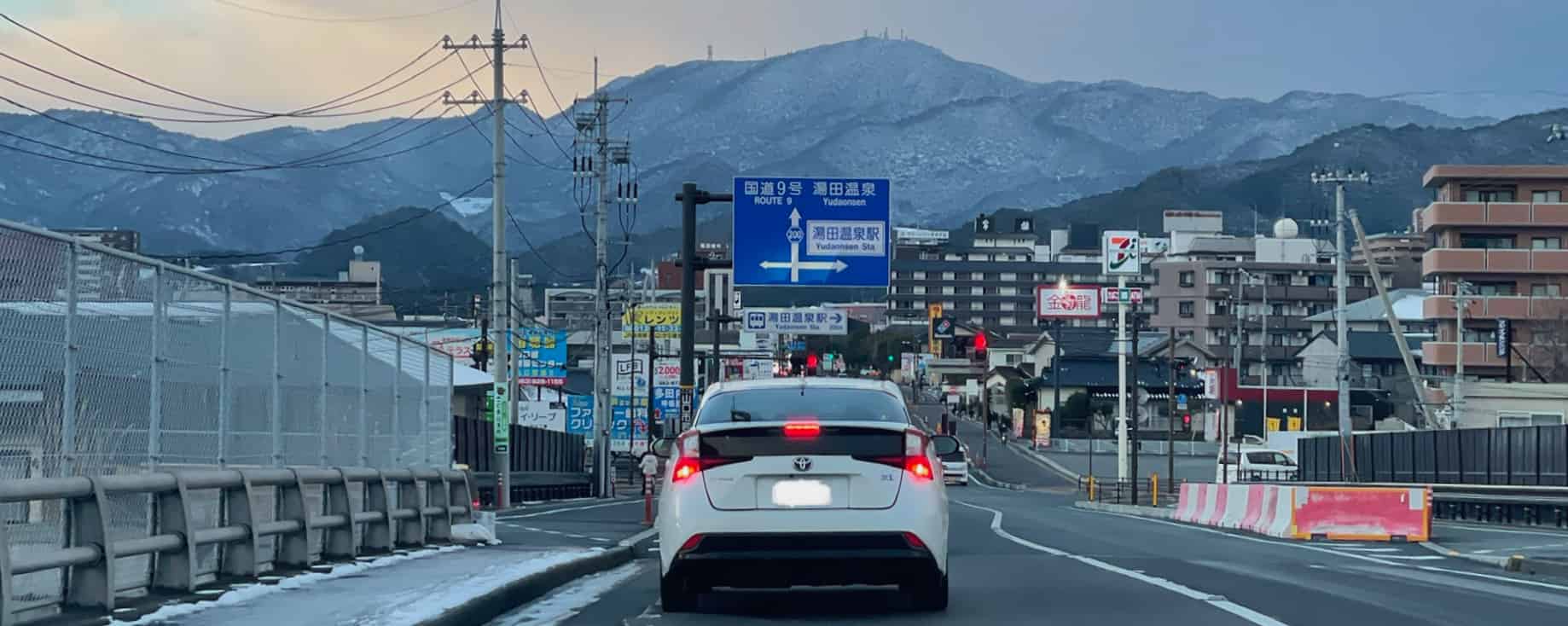
Taxi
This is a method of transportation used mainly in urban areas (cities). These cars (similar to other small or mid-size cars) are ones with a driver who takes passengers to their desired destination. Taxis are (usually) used for short distances. For example, when the weather is bad, and it’s too difficult to walk outside, or when one’s destination is a bit too far to walk from the nearest train station. Usually, people search for an empty taxi and, when they find one, wave to signal that they’d like a ride. Often, they’re parked outside (major) train stations in specific taxi stands. One can also make a reservation in advance over the phone to be picked up at a desired location. Nowadays, reservations can also be made via smartphone applications.
The fare for a taxi consists of a 初乗り (hatsu-nori—base or initial fare) and a 加算 (kasan—additional fare). The hatsu-nori is the base fare that is charged as soon as a passenger enters a taxi. This fare differs per region and taxi company. The kasan is the additional fare that’s added based on the distance traveled and how long the taxi has been idling or waiting. This fare is calculated by the taxi fare meter, and even when stopped (for example, at traffic lights), the meter continues to run. Generally, the longer the ride, the more expensive the fare. Fares can be paid by cash, credit card, rechargeable transit card, cashless payments, and QR code payments.
There are many different types of taxis in Japan. Listed below are the ones most commonly used by tourists.
A Conventional Taxi
These are the taxis most commonly used across Japan. One can ride them in virtually any city in the country. This form of public transportation is ideal for individuals or small groups traveling short distances. Generally, these taxis are not equipped for passengers with physical disabilities who require special assistance. They are usually smaller cars. Larger taxis are available for big groups, but they typically require a reservation.
Sightseeing Taxi
This service allows one to charter an entire taxi, making it easy to get around and sightsee at one’s destination. The taxi driver also serves as a tour guide, explaining the area’s most famous and popular spots. Depending on the size of one’s group, one can charter not only a conventional taxi but also larger taxis. The fare for a sightseeing taxi is paid the same as a conventional taxi; one pays when getting off at their destination.
Rental Car
These are cars one can rent for a set period of time and drive wherever they like. They’re great for traveling in areas where trains and buses are limited. There are usually rental car shops near major train stations and airports, so one can often rent a car immediately after getting off a bullet train or airplane. One can smoothly start their trip. Please note that a valid driver’s license is required to rent a car in Japan.
It’s not just cars—one can also rent a scooter or motorbike. However, depending on the size of the vehicle, a motorcycle license may be required. For those who know exactly what they would like to rent, it’s best to check in advance which type of license is required.
For those looking to rent a car in Japan, depending on the country where one obtained their driver’s license, an international driver’s license may be required. Detailed information on this can be found online, such as on the official Japan National Tourism Organization website.
The cost of a rental car depends on the company providing the vehicle and the type of car rented. Usually, the price is determined by the vehicle's size and the length of the rental.